School Icon Hot Glue Gun Line Black Review
As a designer who has spent years digitizing patterns and testing them on everything from delicate baby onesies to heavy canvas tote bags, I have learned that the success of an embroidery project often hinges on the simplicity and clarity of the source image. When I first pulled up the School Icon Hot Glue Gun Line Black file, my immediate reaction was one of appreciation for its clean, minimalist aesthetic. In the world of Icons and Graphics, less is frequently more, especially when you are translating a digital concept into physical thread.
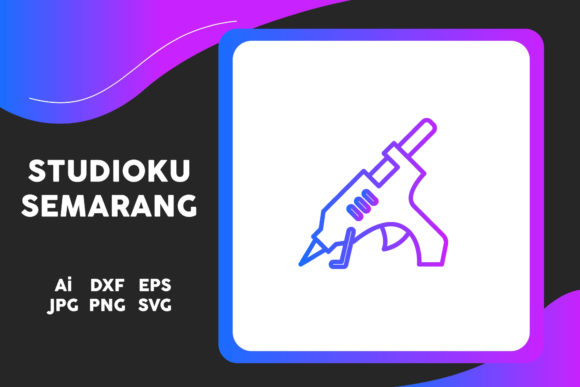
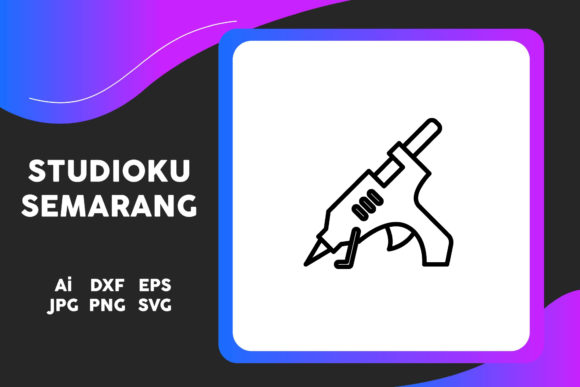
This particular design features a stylized line-art representation of a hot glue gun, rendered in stark black against a transparent or white background. The lines are uniform and confident, avoiding the jagged edges that can plague lower-quality vector conversions. For those of us in the craft business, this level of polish is non-negotiable. It suggests a professional touch that translates well into a handmade product destined for an Etsy shop or a local craft fair.
First Impressions and Visual Personality
The mood created by the School Icon Hot Glue Gun Line Black is playful yet functional. It evokes the spirit of DIY culture, maker spaces, and creative classrooms. This is not just a tool; it is a symbol of creation. Visually, the layout is balanced. The handle, trigger, and nozzle are distinct enough to be recognized instantly, even at smaller scales. This recognizability is crucial for brand consistency if you are using this icon as part of a larger logo suite for a creative studio or a supply store.
What stands out most is the versatility of the line weight. Because it is provided as a high-resolution graphic with a canvas size of 1920 px by 1280 px, the details remain crisp when scaled down. However, as an embroidery reviewer, I must caution that screen resolution does not equal stitch readiness. The available formats—AI, EPS, SVG, DXF, JPG, and PNG—are excellent for graphic design, printing, and cutting machines, but they are not native machine embroidery files. This distinction is vital for Etsy sellers and digital product sellers who might confuse vector graphics with stitched designs.
Real-World Application: The Maker’s Tote Bag
To truly evaluate this design, I imagined a specific real-life scenario: creating a custom embroidered tote bag for a local art teacher. The goal was a subtle, chic accessory that screamed "creative professional" without being overly loud. I placed the School Icon Hot Glue Gun Line Black on the lower corner of a natural cotton canvas bag.
In this context, the design shines. The black line work contrasts beautifully against the neutral fabric. If I were stitching this, I would likely use a simple running stitch or a narrow satin stitch to follow the lines of the icon. The simplicity of the shape means there are no dense fill stitch areas that could cause puckering on the flexible canvas. The result is a lightweight, flexible embroidery that feels integrated into the fabric rather than sitting heavily on top of it. Customers reacting to such a product would likely appreciate the understated elegance, perceiving it as a high-end personalized gift rather than a mass-produced item.
Considerations for Different Fabrics and Hoops
While the design is robust, its performance varies depending on the substrate. On smooth, tightly woven fabrics like poplin or broadcloth, the lines will appear sharp and defined. However, on textured fabrics like terry cloth towels or fuzzy fleece, the fine lines of the School Icon Hot Glue Gun Line Black might get lost. In these cases, increasing the stitch width or adding a slight outline could help maintain visibility.
For small hoop sizes, such as a 4x4 inch hoop used for caps or baby items, this icon is ideal. Its compact nature allows it to fit comfortably without requiring excessive resizing that might distort the proportions. When working on curved surfaces like baseball caps, the lack of large solid filled areas is a benefit. Large filled areas can pull and distort the fabric on curved hoops, but this line-based icon minimizes that risk, ensuring a professional finish on custom apparel.
Caution is advised when using this on dark fabrics. Since the design is inherently black, stitching black thread on black fabric will render it invisible unless you use a contrasting thread color or apply an applique design technique with a light-colored fabric backing. Always test your thread colors against your fabric choice. A vibrant yellow or teal thread could transform this black-line concept into a pop of color that appeals to a younger demographic for baby embroidery or school supplies.
Commercial Viability and Branding
For commercial embroidery projects, this icon serves as an excellent asset. It can be used on aprons for workshop instructors, patches for sewing kits, or even as part of a packaging design for handmade goods. The professional look of the icon enhances customer trust and product value. It signals that the creator pays attention to detail and understands modern design trends.
However, because the product is delivered as graphic files (SVG, AI, etc.) and not as a native embroidery file (PES, DST, JEF, etc.), users must digitize it themselves or hire a digitizer. This is a critical step. Simply importing an SVG into embroidery software does not guarantee optimal stitch placement. You must check stitch density, assign proper underlay stitches, and ensure that the connections between lines are secure to prevent unraveling after washing. For small shop products that need frequent laundering, such as kitchen towels or children's clothes, proper digitizing is essential for longevity.
Practical Designer Notes
Before committing to a full production run, I recommend the following steps:
- Test on Scrap Fabric: Always stitch out the design on the same type of fabric you intend to use for the final product. This helps you identify any tension issues or fabric distortion.
- Check Stabilizer Compatibility: Use a cut-away stabilizer for stretchy fabrics like t-shirts to prevent the design from warping over time. For woven fabrics, a tear-away stabilizer may suffice.
- Verify Licensing: While the files are available for purchase, always confirm the license terms regarding commercial use. Ensure you have the right to sell finished items featuring this design.
- Mockup Testing: Create printable mockups using the JPG or PNG files to visualize how the design looks on different products before stitching. This saves time and materials.
- Contrast Check: If stitching on dark fabrics, consider using a lighter thread color or modifying the design in your graphics software before digitizing.
In conclusion, the School Icon Hot Glue Gun Line Black is a versatile and stylish addition to any designer’s library of design assets. Its clean lines and recognizable shape make it suitable for a wide range of applications, from tote bag design to sweatshirt embroidery. By understanding its limitations and taking the necessary steps to properly digitize and test the design, you can create high-quality, professional-looking products that resonate with customers and elevate your brand. Whether you are a hobbyist looking to add a personal touch to a gift or a seasoned craft business owner expanding your product line, this icon offers a solid foundation for creative expression.